Taher Jaoui
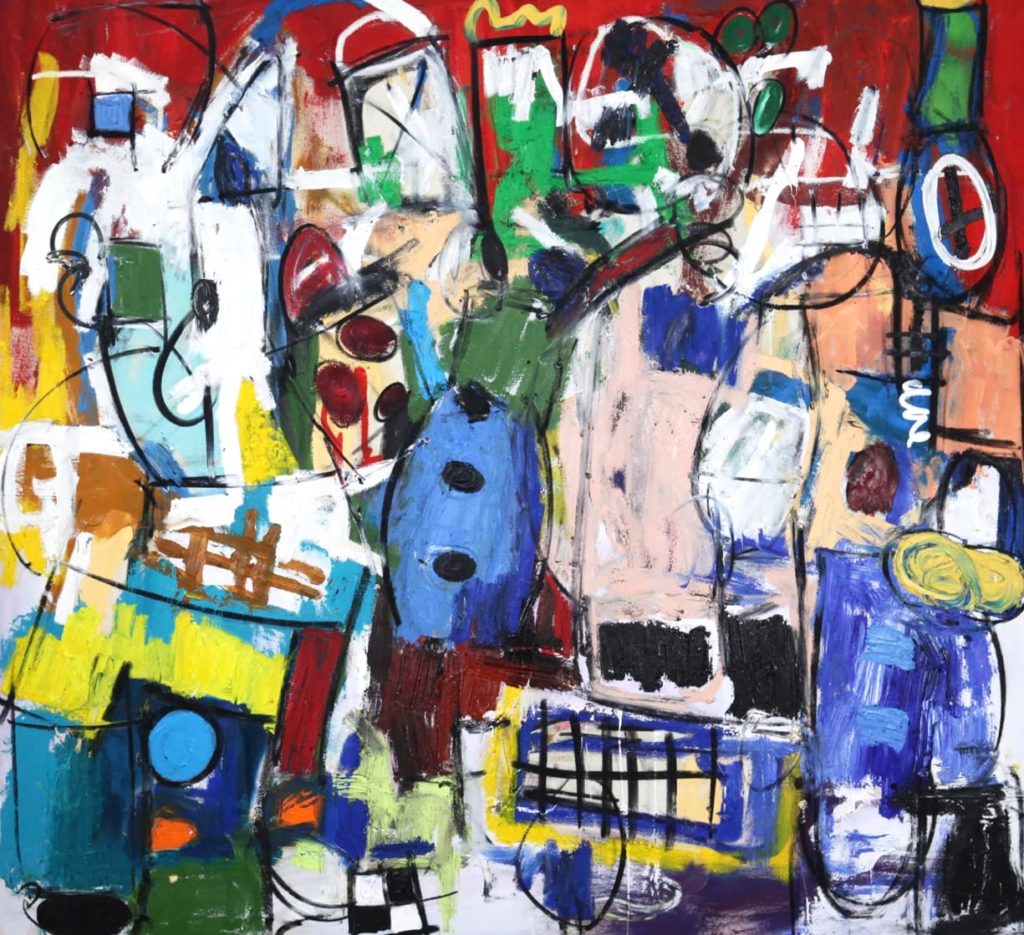
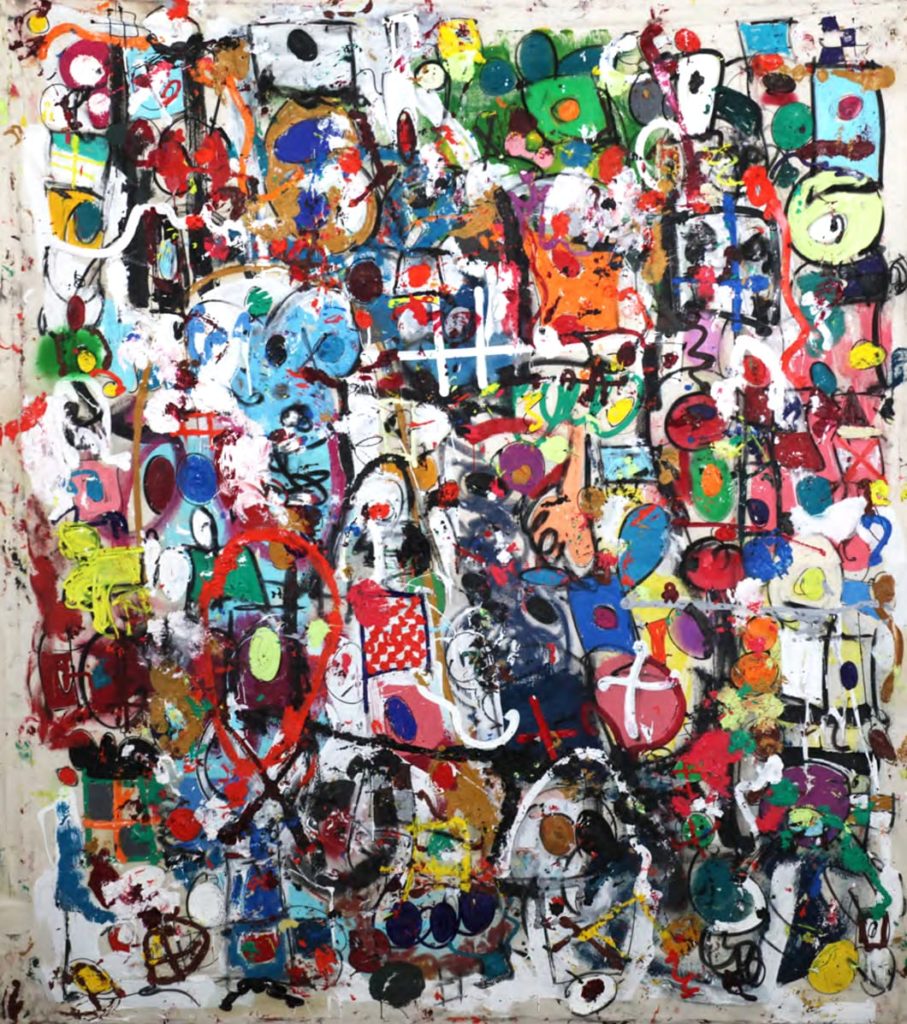
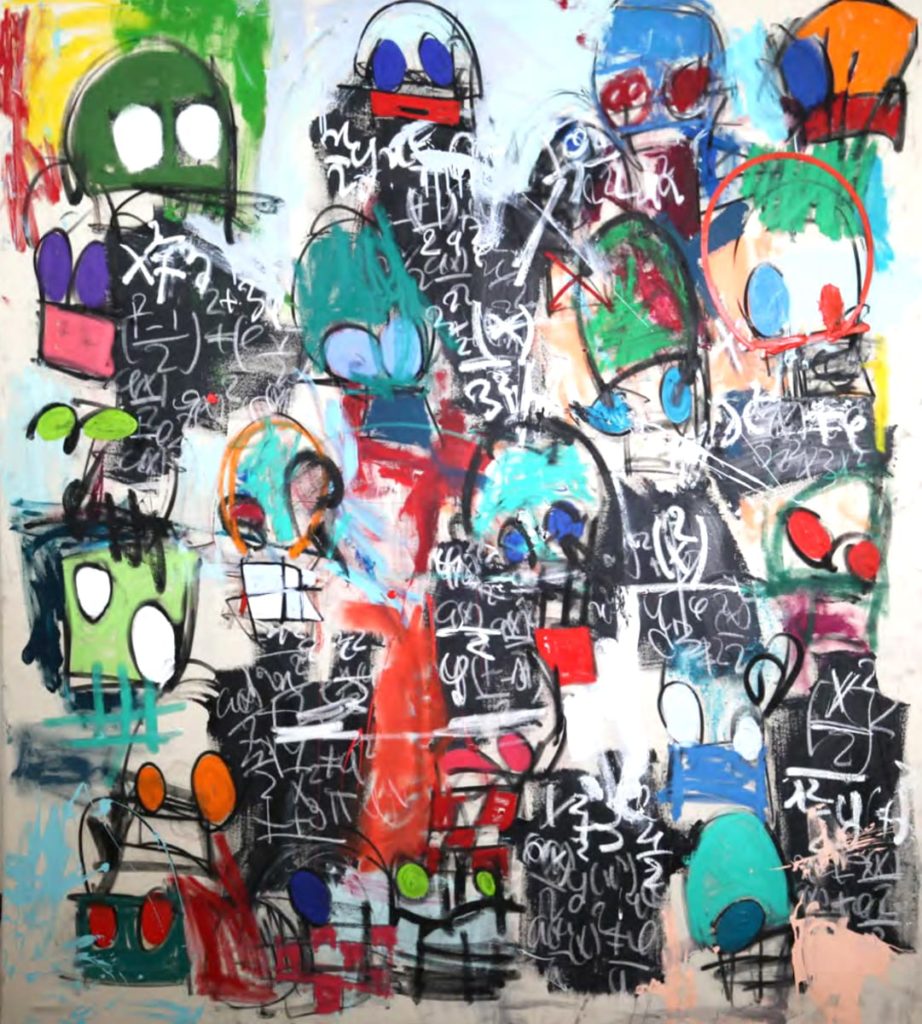
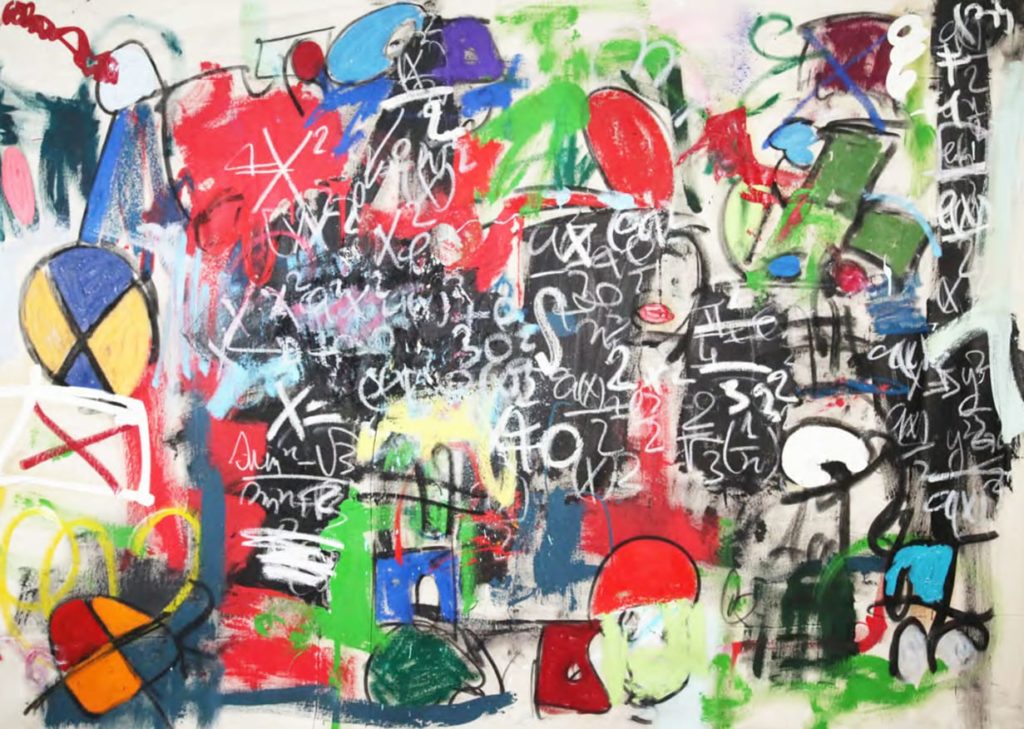
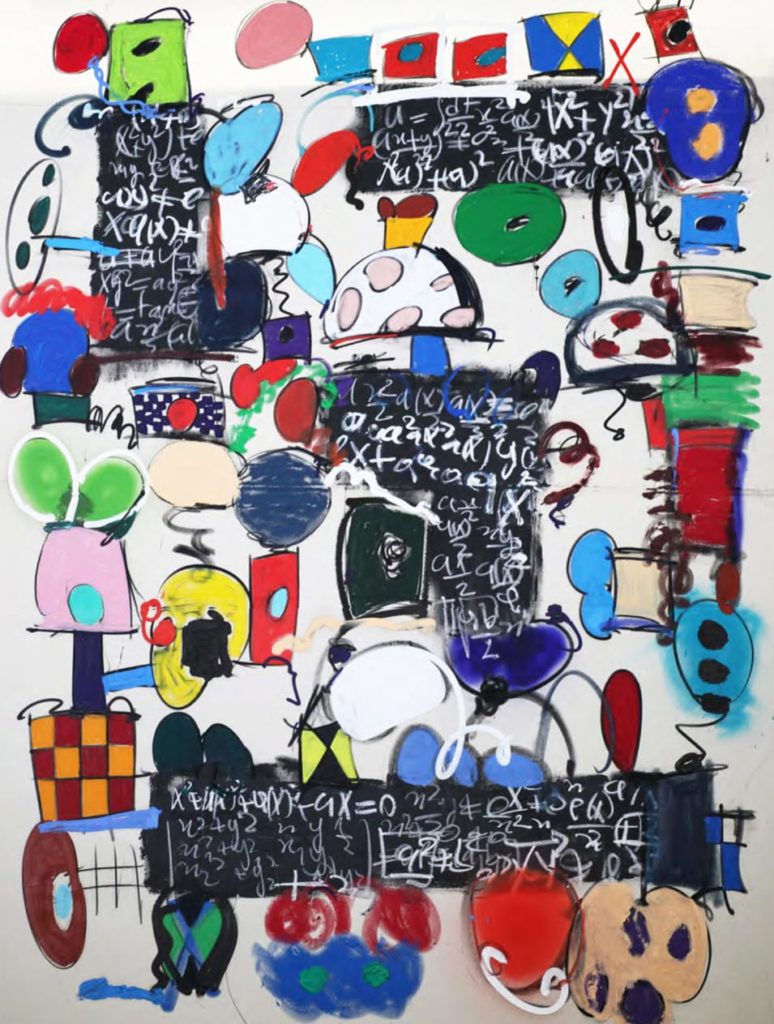
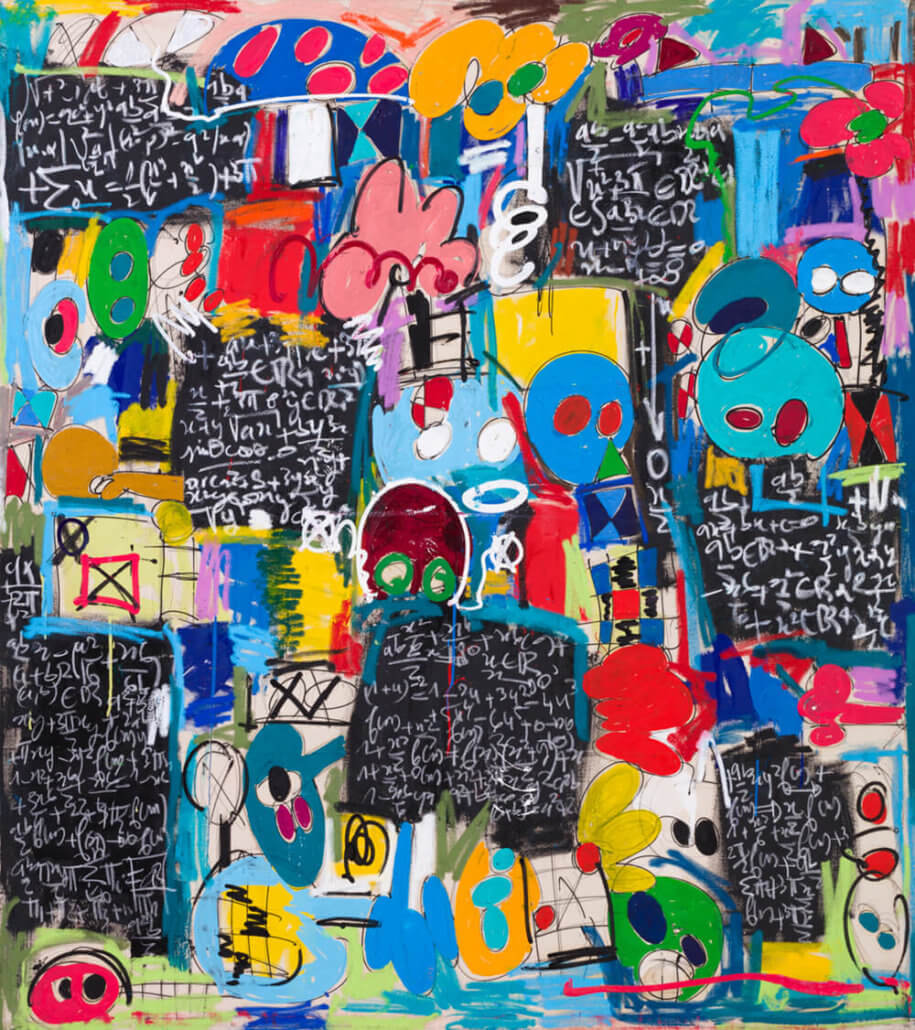
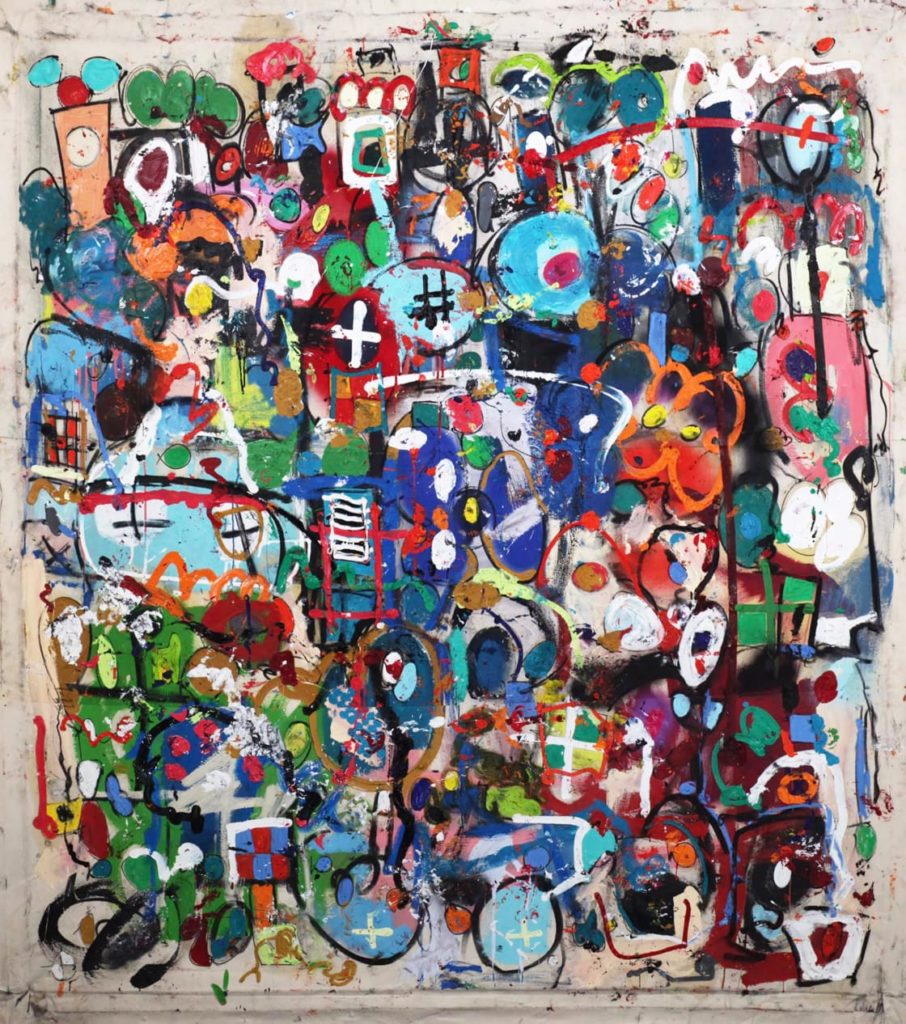
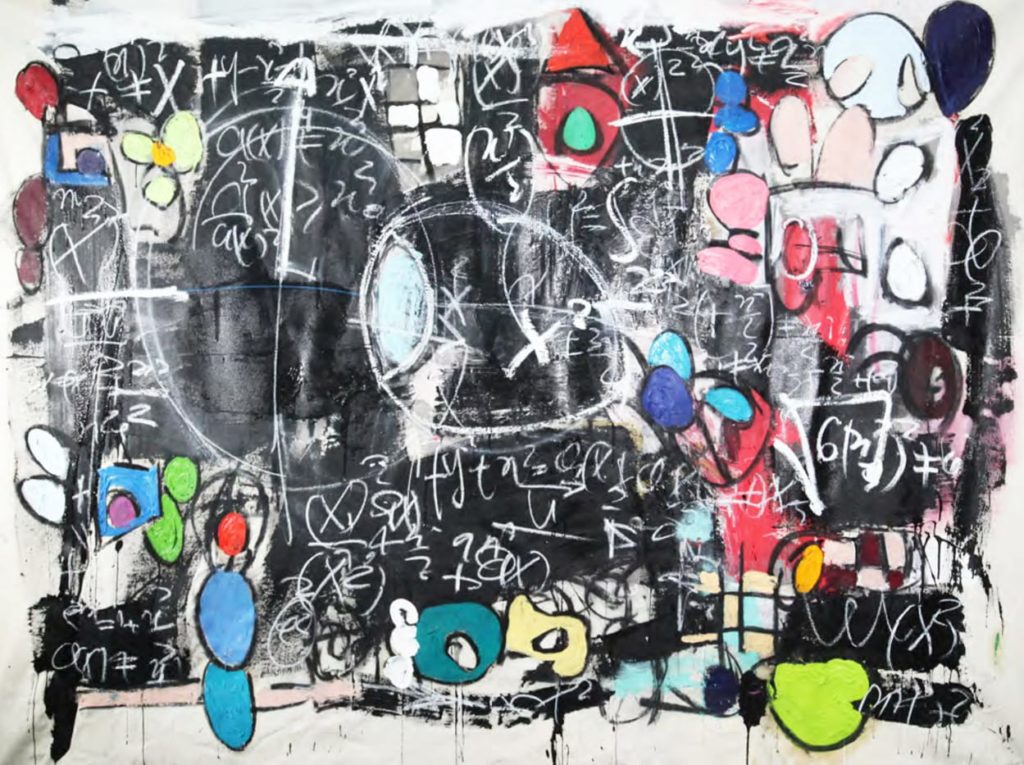
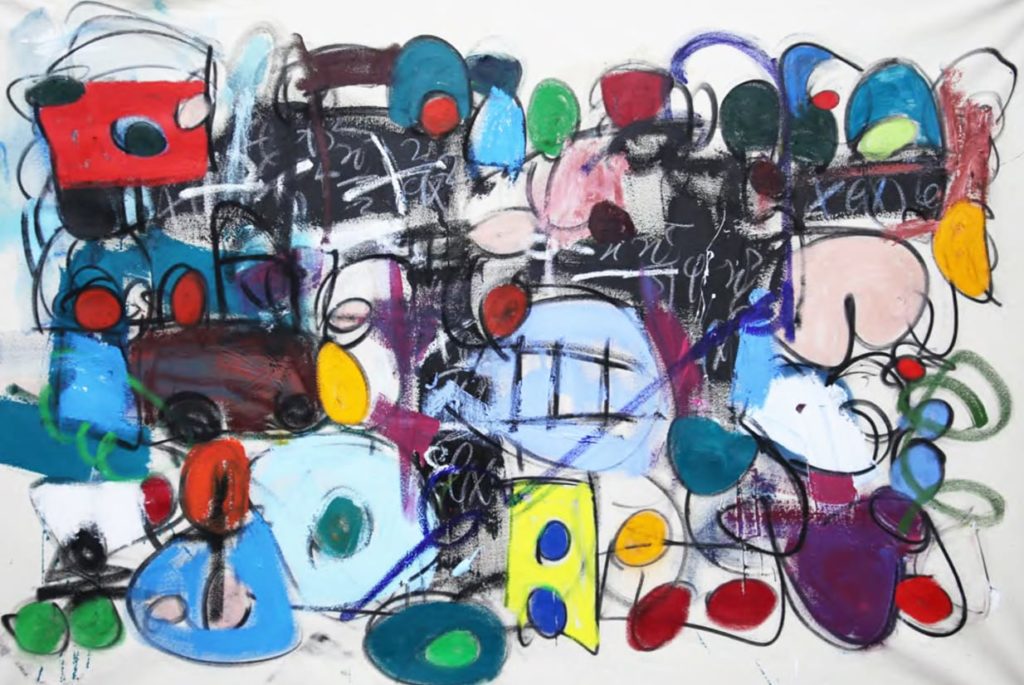
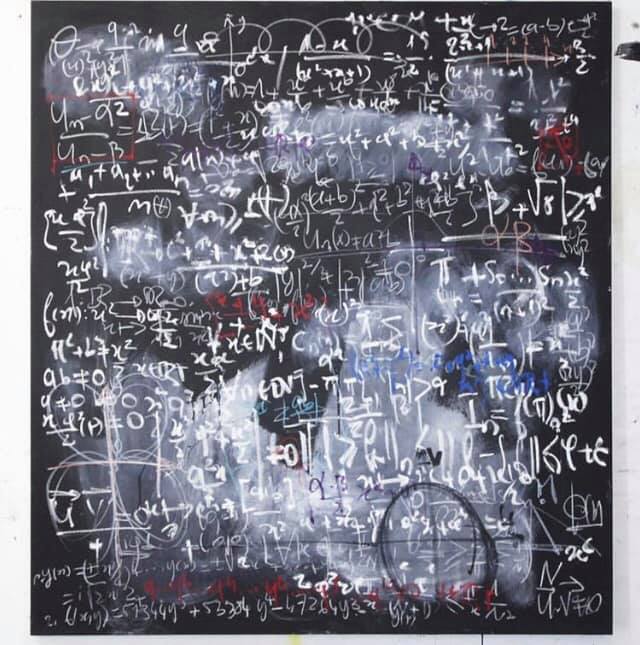
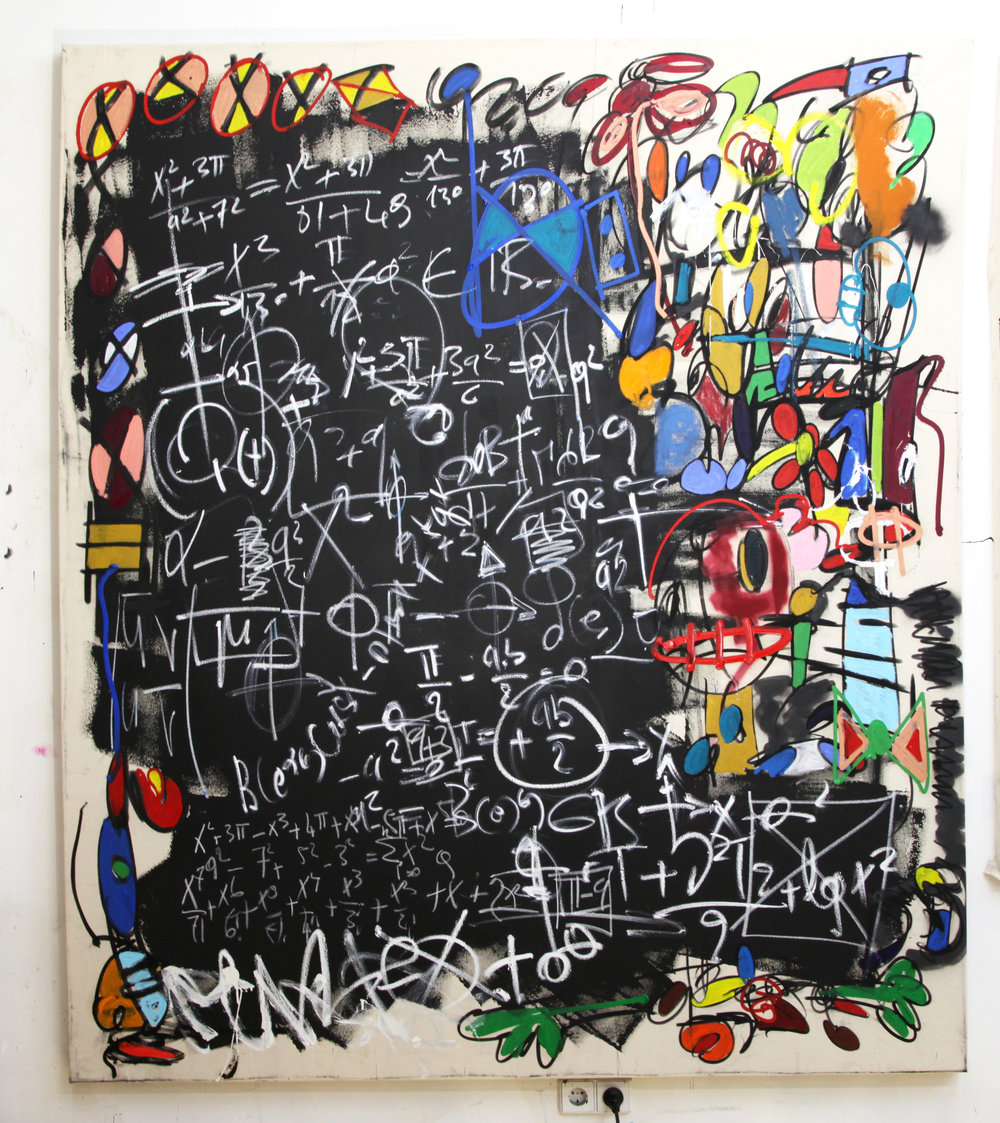
Creating captivating and technically demanding work with strong inspiration from the abstract expressionist movement of the 50s and 60s, Taher Jaoui's paintings are rich assemblages of layered forms, vibrant colors, expressive gestures, and mathematical signs and formulas. Applied to the canvas through dynamic interaction, a physical dialogue from front to back in which perspective and orientation change continuously until all elements are correctly balanced, these opulent creations are the artist's personal way of expressing himself.
Through a series of spontaneous movements, directly inspired by the way the canvas reacts, his work is compared to a dance routine with a familiar partner. Being impulsive and unconstrained in execution, familiarity with materials is essential for the creation process, which strongly depends on the ability to react quickly and predict the functioning of elements together. Superimposing pastels, oils, and acrylics, the artist accentuates the richness of his work by building a raw texture that directly captures the physical energy put into each gesture. Serving as a channel to convey his thoughts, emotions, and visions, the artistic practice is Jaoui's source of confidence and peace, while the finished work becomes a documentation of the process of realizing these feelings. Without any academic artistic training, his artistic practice is influenced by African primitives: art, graffiti, glitch art, the COBRA movement, as well as philosophy and the post-war abstract expressionist movement. Variety of simple forms and motifs on familiar forms that evoke abstract crowns, to scribbling sections on a blackboard, the surface of the canvas becomes the workspace through which the artist exercises his modes of expression.
The concept of building something from a variety of singular elements is a result of computer science and engineering studies, some of which come to life through abstract mathematical signs and formulas sometimes incorporated into Jaoui's enticing compositions. This element, as well as the spatial vision of the surface, once again makes a strong connection with early abstract expressionism, concepts that took into account the ideas of quantum mechanics in their conceptualization. Working regularly on a large scale, the works that are exclusively constructed in an automatic or subconscious way, in fact, require meticulous planning and the use of space and materials. While balancing his thoughts and feelings in creation, Jaoui's work carries this sense of rebellion, anarchic, highly idiosyncratic, and, some might say, a nihilistic sensation, while still building an infinity of interpretations and dependent experiences for the spectator.
The artist's works