Maria De Campos
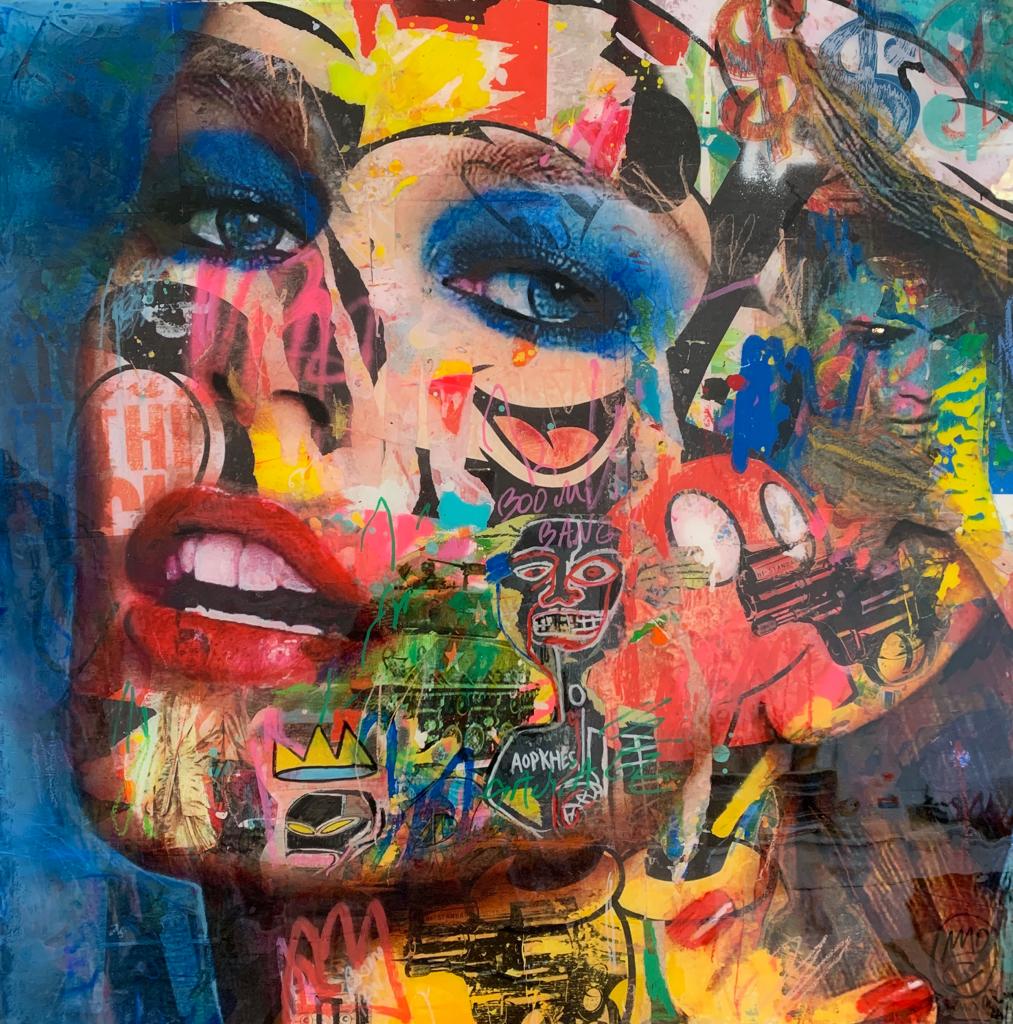
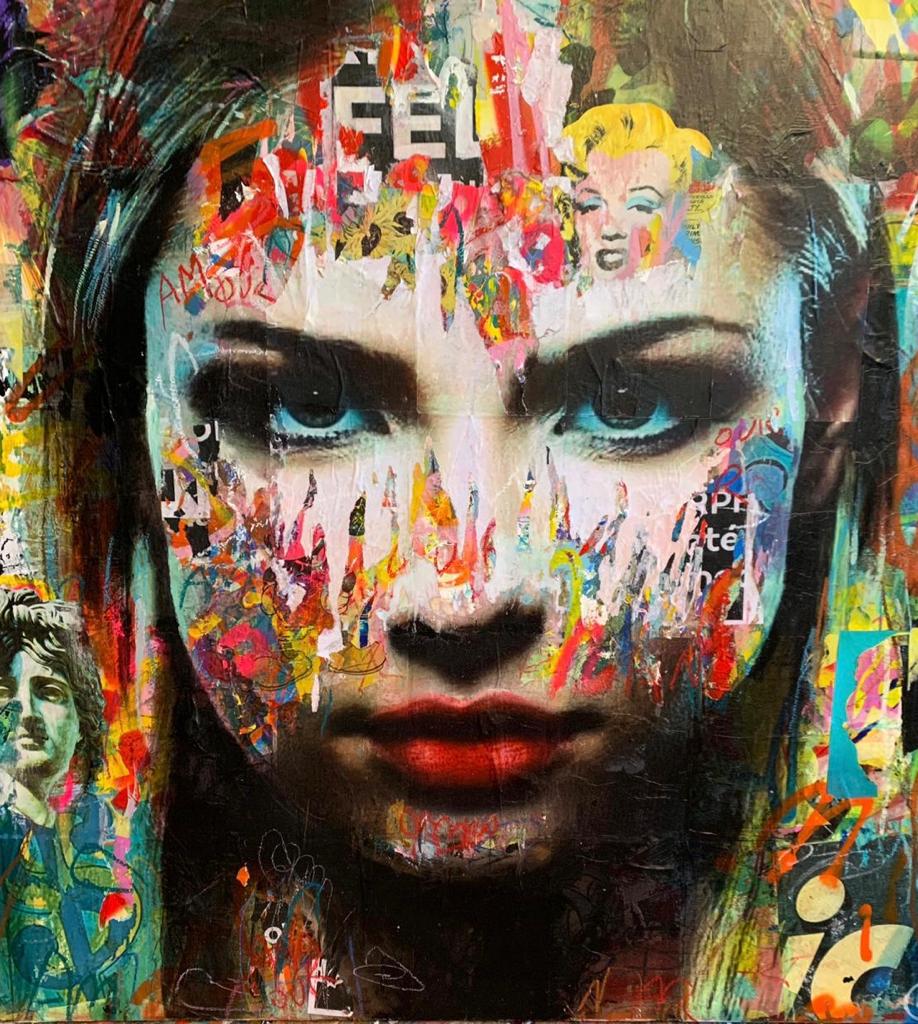
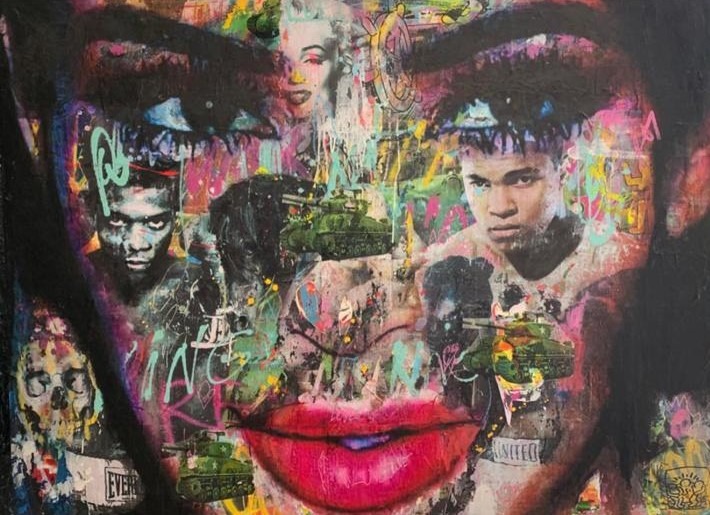
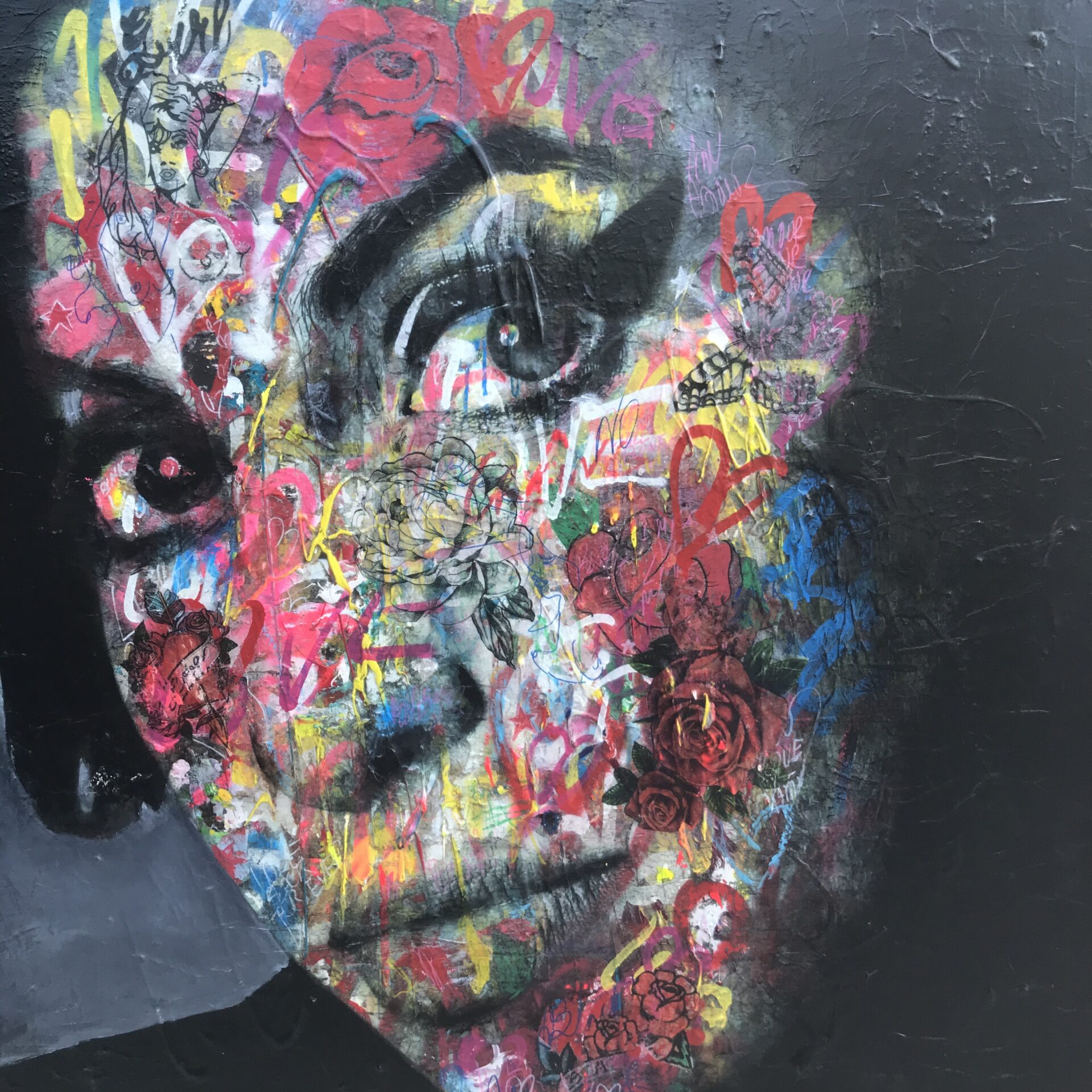
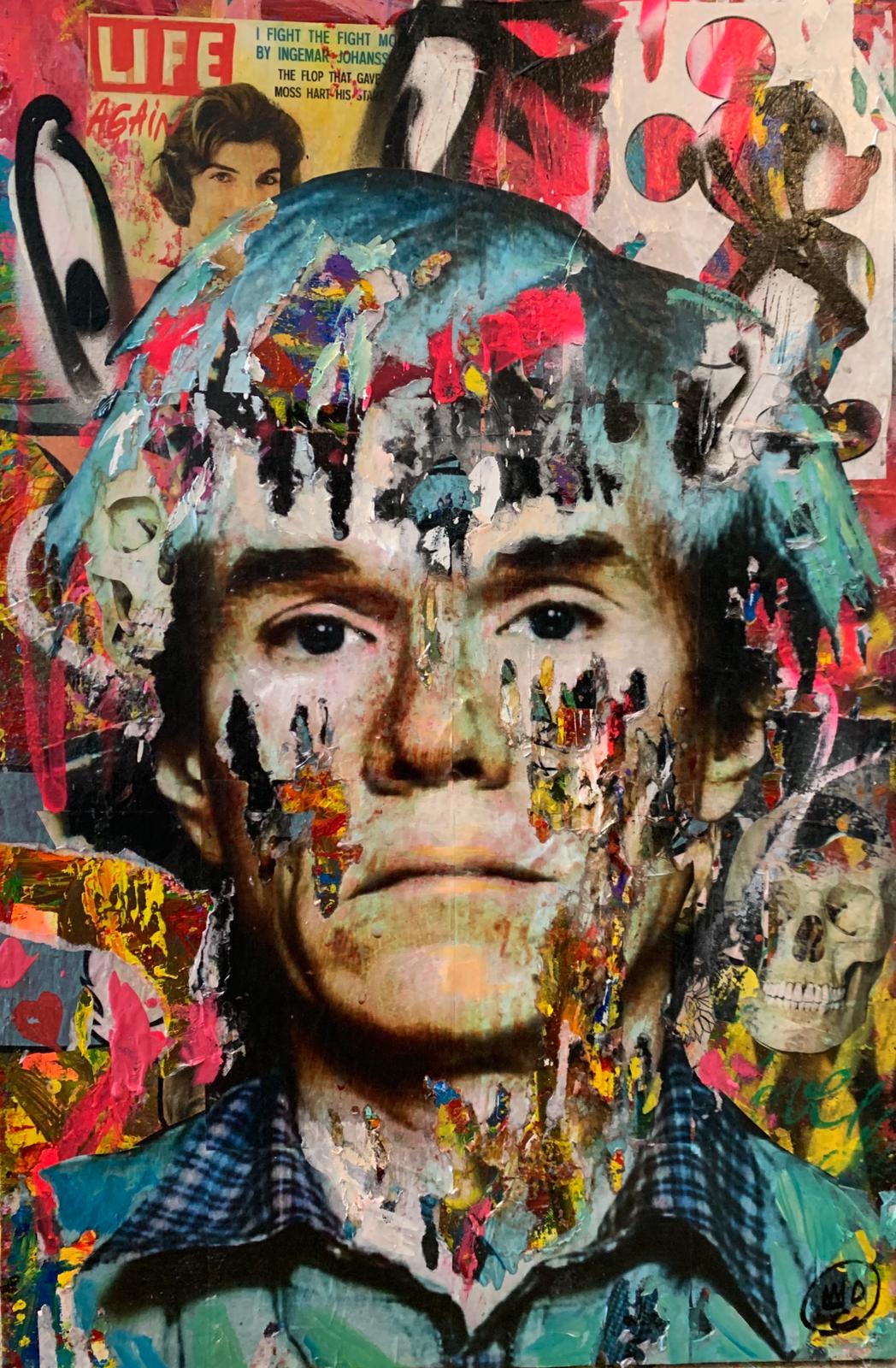
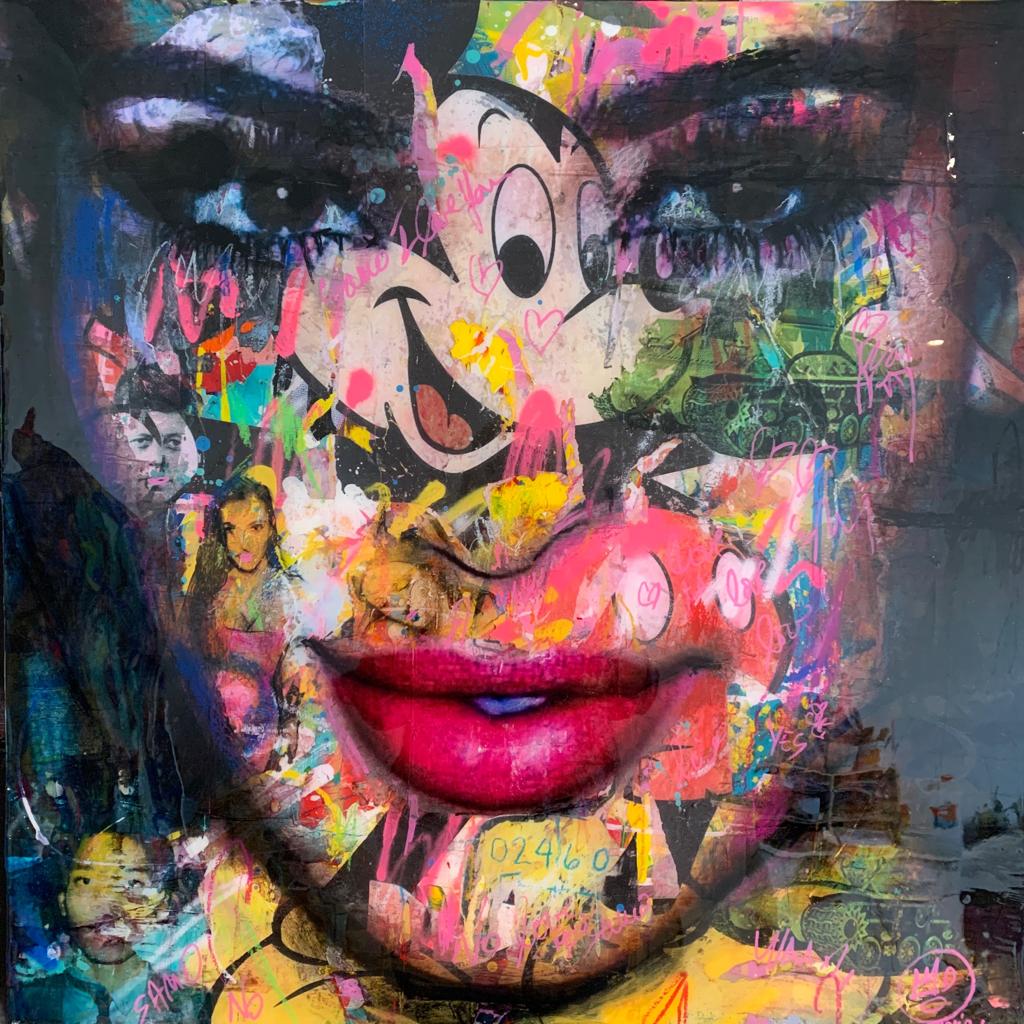
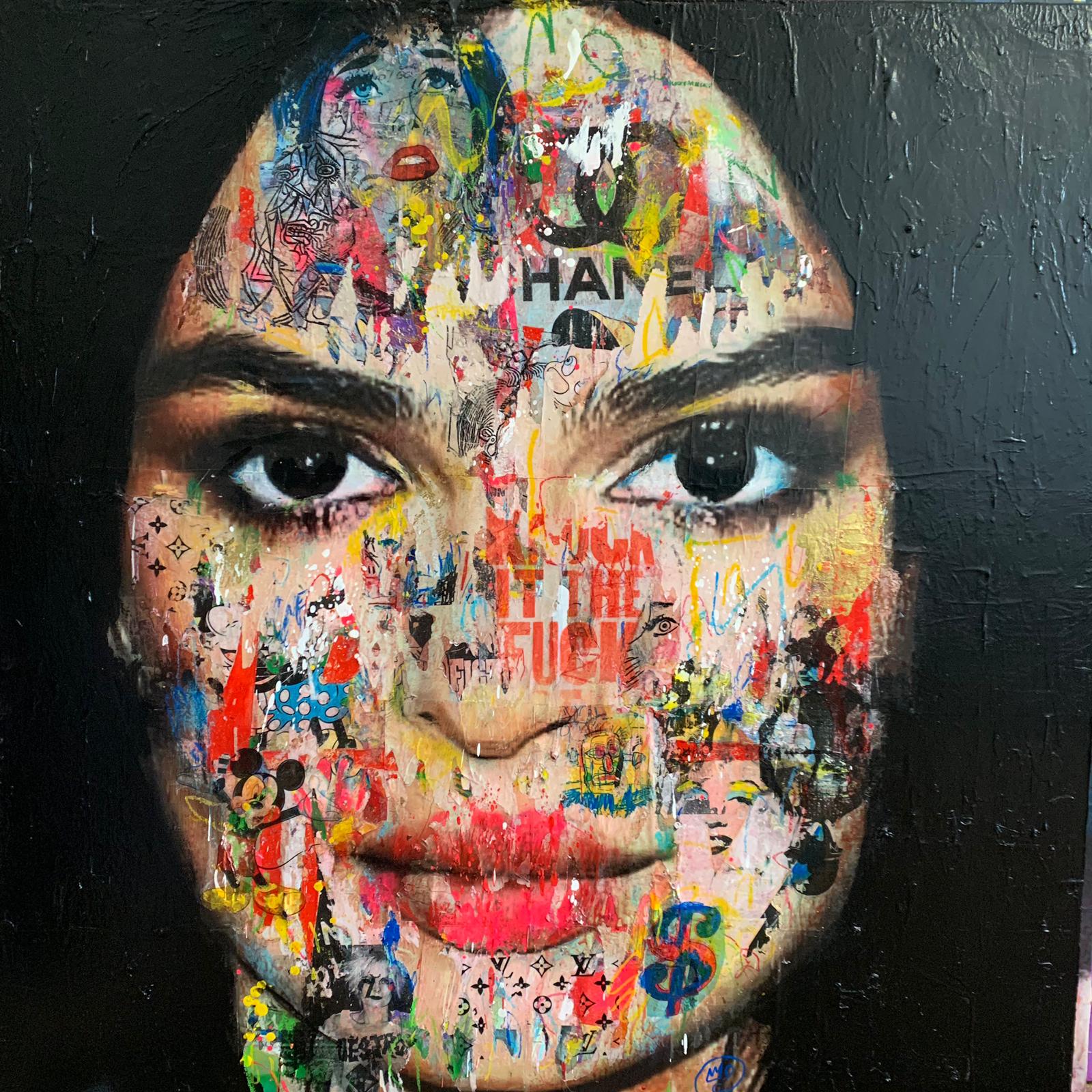
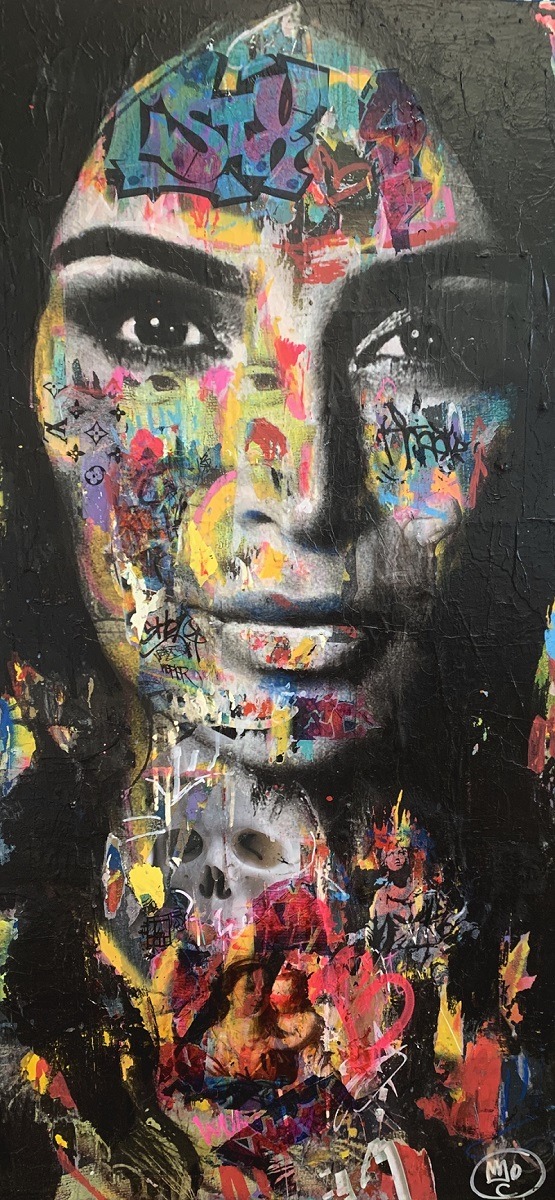
Maria De Campos, Portuguese painter born in 1977, lives and creates today in Drôme, France, where she develops a pictorial universe at the crossroads of Pop art, Street art, and expressionism. Trained at the École Régionale des Beaux-Arts de Valence, she is passionate about visual arts and contemporary imagery, making the great icons of the 20th century her main and recurring theme. Portraits of men, women, and even celebrated animals are reworked by color in compositions where collage and dripping (superposition of bright hues) serve an aesthetic as much as intellectual quest. Working tirelessly with matter and color, Maria seeks to surprise, awaken reflection, and break the clichés that each of us may hold about these personalities. Her canvases, undoubtedly contemporary and current, sublime the celebrities while hiding them behind layers of raw color and fragments of text, creating a visual tension between revelation and concealment.
Her artistic radiance is based on a unique approach to iconographic portraiture. Maria De Campos does not simply reproduce celebrated faces: she reinvents them, sometimes entirely masking them, depriving them of facial expression to question our relationship with celebrity and image. In some works, the icon becomes mute, blind, devoid of its senses; a radical gesture that invites the spectator to reconsider their own representation of these emblematic figures. Far from hagiography or superficial fascination, her compositions introduce melancholy and poetry into the treatment of faces, transforming each portrait into a mirror of our collective projections. This approach inscribes her work in a line of artists questioning identity, media representation, and the fabrication of contemporary myths.
Beyond technical virtuosity, Maria De Campos embodies the engaged artist-thinker in a profound reflection on identity and celebrity. Her feelings and thoughts are expressed through sublime portraits where color explodes, where dripping creates narrative layers, and where collage fragments reality. Each canvas becomes a terrain of exploration where yesterday's and today's icon is revisited, deconstructed, and rehumanized. By masking expression, by drowning the face in chromatic matter, she forces us to see beyond the conventional image, to question what lies behind the veneer of notoriety. In Maria De Campos' work, art is at once a colorful celebration, an identity questioning, and an invitation to break our fixed representations of the world of icons.
The works of Maria De Campos